
Selecting the right level of protection for a facility is a decision we cannot afford to get wrong. Security managers often find themselves wondering whether a medium protection grade is sufficient or whether they need to step up to high security. Understanding the difference between RC3 and RC4 is important both to ensure that assets are protected against organized attacks and to comply with insurance company requirements.
In this context, RC4 certification has established itself as the gold standard for vulnerable sectors. Understanding why insurers require this standard is essential for meeting legal requirements and, above all, for ensuring real protection against organized and professional attacks.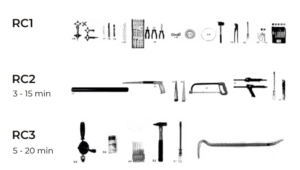
What is RC4 certification and how does it work?
RC4 certification — “Resistance Class 4” — is a security classification defined by the European standard UNE-EN 1627. This standard evaluates a security door’s ability to withstand intrusion attempts carried out by experienced attackers. Unlike lower grades, RC4 is designed to resist attacks using high-powered electric and manual tools.
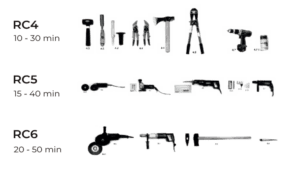
The testing process required to obtain this certification is extremely rigorous. An RC4 door must withstand a net attack time of at least 10 minutes. During these tests, tools such as heavy drills, jigsaws, large hammers, and axes are used. The simulated attackers have in-depth knowledge of the door’s structure and look for specific weaknesses in the frame, panel, or locking system.
The functionality of an RC4-certified door lies not only in its physical robustness but in its integrated design. These systems feature high-density internal steel reinforcements and multi-point locking systems with anti-drill protection. This is not simply a “strong” door — it is an engineering element designed to efficiently and demonstrably deter and delay unauthorized access.
In addition to mechanical resistance, these doors must pass static and dynamic load tests. This ensures that the structure does not give way under lateral pressure or forceful impacts. In short, the RC4 grade guarantees that the enclosure is capable of neutralizing the threat posed by criminals who plan their attacks and use specialized tools to attempt to breach the security perimeter.
Who needs it? Real use cases
Implementing RC4-certified systems is not a generic measure but a specific solution for environments with a high risk profile. The luxury jewelry and watchmaking sector is undoubtedly one of the primary users. In these establishments, the concentrated value of the merchandise justifies a proportional investment in physical security that meets the strictest standards required by insurance companies.
Another critical use case is banking institutions and vaults. In these spaces, legal regulations often require the installation of Grade 4 elements to protect both cash and sensitive customer information. An RC4 door acts as the last line of defense, providing the time needed for security forces to respond to a confirmed alarm.
Embassies and government buildings also require this level of protection. Diplomatic security demands enclosures that not only prevent intruders from entering but also offer both symbolic and real resistance against coordinated assault attempts. In these environments, RC4 certification is often combined with other protections, such as ballistic resistance, to create a complete security perimeter.
Finally, the luxury residential sector and panic rooms have begun adopting RC4 grade. Property owners who store works of art or private collections, or who simply want superior protection for their families, find the peace of mind they need in this certification. Insurers for high-value items often significantly reduce premiums when clients can demonstrate that they have enclosures certified at this level.
Certifications and standards: RC, FB, and EN
Navigating the world of technical certifications requires distinguishing between different types of resistance. The fundamental standard in Europe is EN 1627, which establishes burglary resistance grades — commonly understood as resistance to break-in attempts. Levels range from RC1 to RC6, with RC4 being the optimal balance point for high commercial and residential security.
It is essential not to confuse burglary resistance “RC” with ballistic resistance “FB”. While RC certification measures how long a door withstands assault tools, the EN 1522/1523 standard “FB grades” measures resistance to the impact of firearm projectiles. A door may carry RC4 certification without being bulletproof, and vice versa. However, in high-security projects it is common to find products that combine both certifications.
The difference between RC3 and RC4 is substantial and is often the line drawn by insurers. RC3 protects against attacks with simple hand tools such as crowbars or screwdrivers, carried out by opportunistic criminals. RC4, by contrast, accounts for the use of battery-powered drills and cutting tools. For this reason, RC3 is generally considered insufficient for special risks.
When choosing a supplier, it is essential to verify that the certification has been issued by an accredited laboratory such as AENOR in Spain. It is not enough for the manufacturer to claim that their door is equivalent to Grade 4; an official certificate linked to the specific model must exist. This document is what will give the installation genuine validity in a security audit or when making a claim with the insurance company.
Choosing a door with RC4 certification is a strategic decision that goes beyond regulatory compliance. It represents a commitment to the genuine protection of your assets and the continuity of your business. At CBX Security, we specialize in high-security solutions that meet the most demanding European standards.
Contact CBX Security for a personalized assessment and make sure your business meets all security and insurance requirements.