
Critical infrastructure operators in Germany face a security specification environment shaped by the BSI Kritisverordnung (KRITIS), the federal framework that defines minimum protection requirements for energy, water, transport, telecommunications, and financial sector facilities. Physical perimeter security at these facilities is not a discretionary upgrade — it is a documented compliance obligation, and the certification standard referenced in the specification determines whether a security shutter, door, or glazing system satisfies the legal threshold.
Why German critical infrastructure requires certified high-security shutters
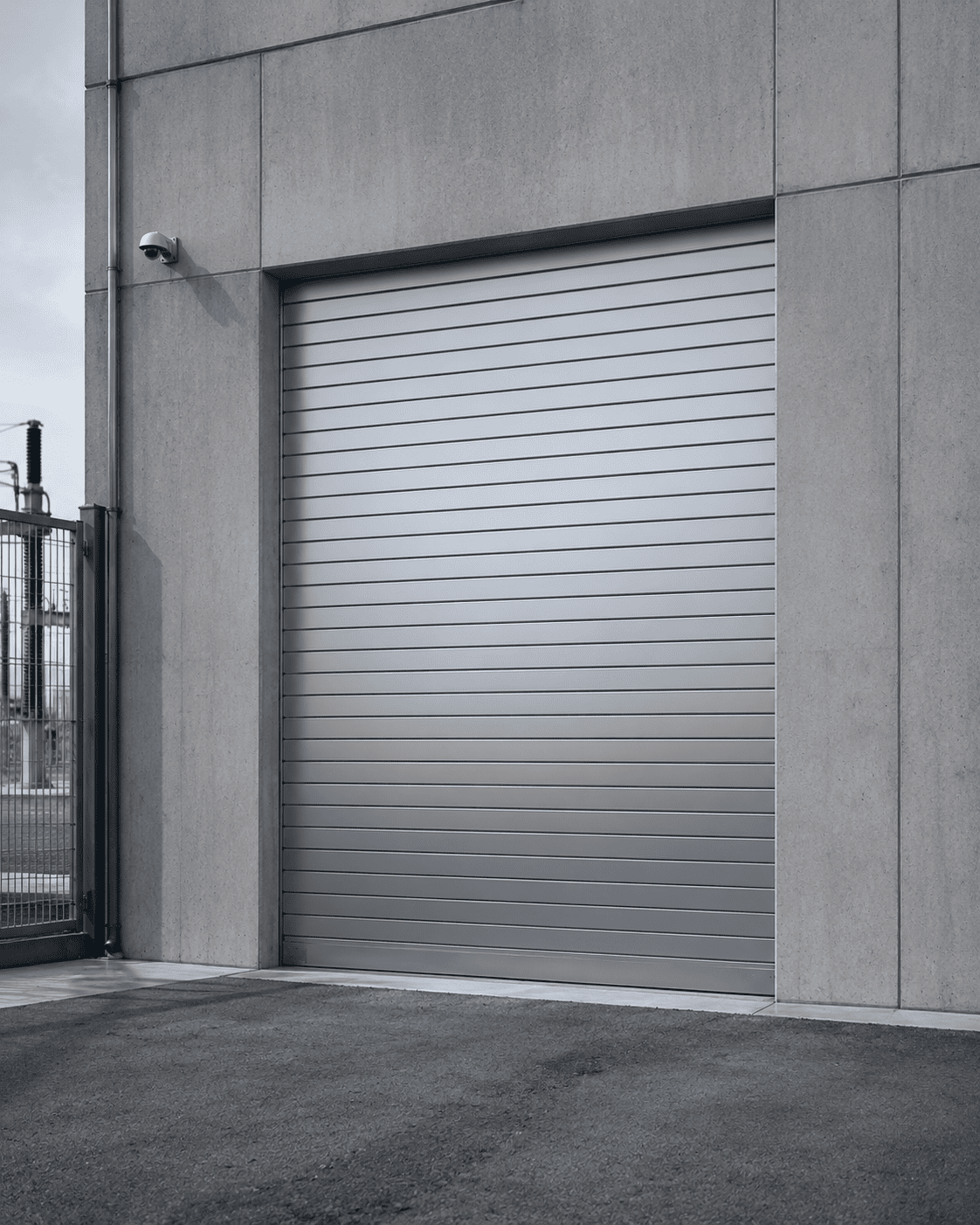
KRITIS facilities — power substations, water treatment plants, telecommunications exchanges, data centers, and financial clearing infrastructure — are classified by the Bundesamt für Sicherheit in der Informationstechnik (BSI) as operators of essential services. The classification carries obligations that extend beyond IT security to physical access protection at every entry point capable of compromising operational continuity.
A perimeter shutter or door at a KRITIS facility must address three independent threat vectors, each governed by a separate European standard: forced entry with power tools, ballistic attack, and in higher-risk classifications, explosive threat. A product rated for general commercial use does not meet KRITIS specification requirements, regardless of manufacturer marketing claims. Only third-party certified test reports referencing the specific EN standard are accepted in German public procurement and insurance underwriting processes.
Applicable standards for German infrastructure specification
Three European standards form the technical basis for any KRITIS-compliant specification, and German procurement officers and security consultants reference them explicitly in tender documentation:
EN 1627:2011 governs resistance to forced entry. For KRITIS perimeter access points, the minimum specification is typically RC4, with RC5 or RC6 required for substations, water treatment control rooms, and telecommunications switching centres assessed as high-priority targets under the BSI threat framework.
EN 1522:1999 governs ballistic resistance. While not universally required across all KRITIS categories, facilities in the energy and financial sectors increasingly specify FB4 to FB6-NS at primary access points, reflecting the elevated threat profile assigned to national-level infrastructure since 2022.
EN 13123-2:2004 governs explosion resistance through live detonation testing. This standard is specified for the highest-risk KRITIS classifications — primarily energy transmission infrastructure and facilities co-located with government or defence installations — where the threat assessment includes vehicle-borne explosive scenarios.
Protection levels by facility type and access zone
Specification requirements vary by infrastructure category and the criticality of the specific access point. The following reflects standard practice for German KRITIS facilities, though final requirements must be confirmed through formal threat assessment by the facility’s designated security officer in coordination with BSI guidance:
| Facility type | Anti-intrusion level | Ballistic level | Blast level |
|---|---|---|---|
| Energy substations & transmission nodes | RC5–RC6 | FB4–FB6-NS | EXR3–EXR5 |
| Water treatment control rooms | RC5 | FB3–FB4 | Not typically required |
| Telecommunications exchanges | RC4–RC5 | FB3 | Not typically required |
| Financial clearing & data centers | RC5–RC6 | FB4–FB6 | EXR2–EXR4 |
| Secondary and service access points | RC4 | Not typically required | Not typically required |
Diamond BL X-TREME — the only roller shutter certified to RC6, FB6-NS and EXR5-NS simultaneously
For German critical infrastructure projects requiring the maximum certified protection level, CBX Security’s Diamond BL X-TREME is the only roller shutter in the world combining all three top-tier certifications in a single tested element:
- RC6 under EN 1627:2011 — maximum forced-entry resistance
- FB6-NS under EN 1522:1999 — resistance to 7.62 × 51 mm NATO rifle ammunition without splinter generation on the protected face
- EXR5-NS under EN 13123-2:2004 — resistance to 20 kg TNT at 4 metres, the highest classification for roller shutters under the standard
- E60 under EN 1634-1 — 60-minute fire resistance
- Class 5 under EN 12424 — maximum wind load resistance
No other roller shutter manufacturer currently holds EXR5-NS certification. The classification was obtained through live explosive testing at an accredited laboratory, with the official test report available for review during German public tender and Vergabeverfahren processes.
For facilities where ballistic and intrusion resistance are required without the full blast specification, the Diamond BL series provides FB6-NS and RC6 certification independently. For lower-tier secondary access points, the SECURBAIX series covers RC3 and RC4 specifications, and the Epsilon series addresses combined fire and intrusion resistance for industrial KRITIS facilities requiring E-rated protection.
Technical documentation for German public procurement
KRITIS infrastructure projects are typically procured through formal Vergabeverfahren (tender procedures) requiring documented technical evidence rather than manufacturer declarations. CBX Security provides the following for each project:
- Independent laboratory test reports for each certification (EN 1522, EN 1627, EN 13123-2)
- Technical datasheets in PDF and DWG format for integration into project drawings
- Specification language compatible with German tender documentation formats
- Direct technical consultation to align the product specification with site-specific BSI threat classifications
CBX Security has delivered certified high-security shutter and door systems for infrastructure and government projects across Europe, the GCC region, and Latin America, with experience navigating multi-standard certification requirements and international delivery timelines.
Common specification errors in KRITIS projects
Specifying the ballistic level without the NS (No Splinter) suffix at occupied facilities. At FB5 and above, fragment generation on the protected side constitutes a serious injury risk and should be a default requirement wherever personnel are present.
Accepting material-level certification in place of complete element testing. A manufacturer certifying only the aluminium slat profile has not certified the assembled shutter. The test report must reference the complete element at project-relevant dimensions.
Failing to confirm that tested dimensions cover the project opening. Ballistic and blast certification is specific to the tested configuration — for large-format vehicular access points, written confirmation that the certified element covers the required width and height is essential before specification is finalised.
Specifying a single standard in isolation when the threat assessment identifies combined risk. A shutter certified to FB6 without EXR certification provides no documented blast resistance. For KRITIS facilities with both ballistic and explosive threat exposure, both certifications must be specified together.
If you are preparing a technical specification for a KRITIS facility, government building, or critical infrastructure project in Germany, contact CBX Security’s technical team for certified documentation, datasheets, and tender support.